
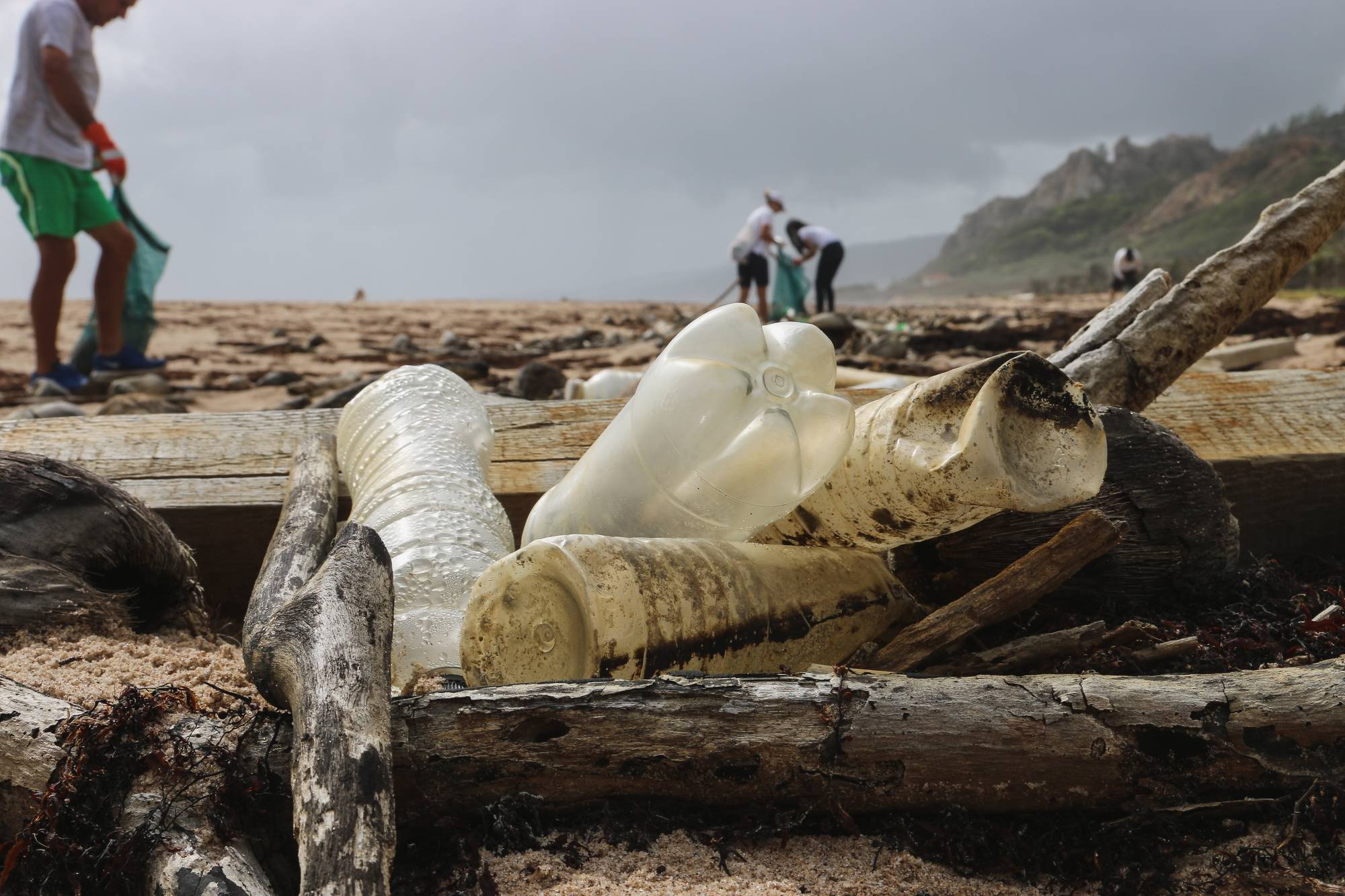
Plastic waste has doubled in the last 20 years causing urgent concern
The Great Pacific Garbage Patch spans waters from the West Coast of North America to Japan and is one of the most striking visualizations of the havoc we are causing to our planet due to our growing use of plastic. The massive swirling vortex of microplastics is not something we can ignore – it is seeping into our lives, drifting through the air and infiltrating our drinking water. The invention of plastic no doubt revolutionized our lives, but we have also grown an unhealthy reliance on it due to the convenience of single-use products and packaging.
The world is producing twice as much plastic waste as two decades ago, with the bulk of it ending up in landfill, incinerated or leaking into the environment, with only 9% successfully recycled[1]. According to a report released by the Center for International Environmental Law, the hidden costs of plastic production and usage are high. Exposure to plastic particles and associated chemicals causes irreparable damage to our bodies and to our planet. 99% of plastic comes from fossil fuels, which means that extraction and manufacturing of the material releases toxic substances into the air, causing adverse health effects[2]. Moreover, plastic does not disappear; it keeps breaking down into smaller and smaller pieces called microplastics. These microplastics are now found everywhere, in tap and bottled water, in shellfish, in honey, in beer, and even inside our bodies, as reported by the Plastic Pollution Coalition[3]. It is up to us to reduce plastic usage and preserve the world for future generations. This is our call to change, and here are a few ways to minimize plastic usage in our daily lives:
Reduce the Use of Single-Use Plastics
Single-use plastics are products and packaging that that are designed to be used only once and thrown away. These products consume a huge amount of energy, water, and natural resources to produce, and are only used for mere moments. Even if some are recyclable, they end up being too costly to do so and are usually sent to landfills instead.
We can avoid the use of these single-use plastic products through small measures such as bringing your own metal straw and reusable mug the next time you buy a coffee. You can reuse takeaway boxes and bring your own bag when you go grocery shopping. These tiny steps may seem insignificant, but you are already doing your part in preventing more plastics from ending up in the trash.
Avoid Products that Contain Microbeads
Microbeads - a kind of microplastic with a specific function of scrubbing and exfoliation - are a growing source of plastic pollution in recent years. They are usually found in beauty and hygiene products, such as body and facial scrubs, cosmetics, and toothpaste. According to a report by Beat the Microbead, 87% of the products they tested from some of Europe’s most popular brands contained microbeads[4].
Next time you shop for personal care products, look for brands that have obtained a ‘Zero Plastic Inside’ certification. These brands and companies do not use harmful microplastic ingredients. Alternatively, you can also look out for products which use VEOCEL™ branded fibers, which are derived from renewable raw material wood and are produced in an environmentally responsible process. These wood-based cellulosic fibers can fully biodegrade in the ocean within 30 days, while fossil-based synthetic fibers cannot. Always do your research before you buy!
Support Sustainable Packaging
In a consumer-based economy, the use of packaging is unavoidable, and that’s understandable. We propose the next best thing: support businesses that use sustainable packaging!
Sustainable packaging is defined as packaging that is either 100% made from recycled or raw materials, reusable or has a small carbon footprint. By supporting small businesses that use eco-friendly packaging, instead of the big multinational giants, we are letting owners know that we care about the environment thus encouraging them to continue using biodegradable packaging. This is important, because #ItsInOurHands to reduce the use of plastics and preserve our beautiful planet for future generations.
[1]https://www.oecd.org/newsroom/plastic-pollution-is-growing-relentlessly-as-waste-management-and-recycling-fall-short.htm
[2]https://www.ciel.org/wp-content/uploads/2019/02/Plastic-and-Health-The-Hidden-Costs-of-a-Plastic-Planet-EXECUTIVE-SUMMARY-February-2019.pdf
[3]https://www.plasticpollutioncoalition.org/guides/singleuseplastics/healthimpacts
[4]https://www.beatthemicrobead.org/wp-content/uploads/2022/06/ExecutiveSummary-PHBI.pd
This initiative is presented by
